Understanding TAR Syndrome
A rare condition. A strong community. A journey no family should walk alone.
What is TAR Syndrome?
Thrombocytopenia-Absent Radius (TAR) Syndrome is a rare genetic condition present at birth.
It is most commonly characterized by:
• Low platelet counts (thrombocytopenia)
• Missing radius bones in the forearms
Individuals with TAR Syndrome may also experience additional medical or developmental challenges, which can vary from person to person.
No two journeys look exactly the same.
You're in the right place.
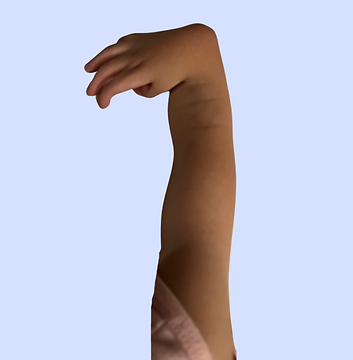
Real life representation of (Long Arm) TAR Syndrome
TAR Syndrome has been understood over time through research, discovery, and the experiences of families searching for answers.

Behind every discovery is a family searching for answers—just like yours.
What Are the Signs?
TAR Syndrome is present at birth, though it may be identified during pregnancy or shortly after delivery.
While every child’s experience is unique, there are common physical and medical characteristics associated with TAR Syndrome.
Common Medical & Physical Signs:
Platelet-Related Signs (Most Critical)
-
Low platelet counts (thrombocytopenia), which can lead to:
-
Easy bruising
-
Bleeding (including blood in stool or urine)
-
Petechiae (small red or purple spots on the skin)
-
Structural Differences
-
Missing radius bones in the forearms
-
Arms that appear shorter or differently formed
-
Possible internal differences (such as heart or kidney conditions in some cases)
Early Development Signs:
-
Feeding challenges in infancy
-
Slower growth or weight gain
-
Delays in certain developmental milestones
What Families Often Notice First:
-
Unexplained bruising or bleeding
-
Differences in arm movement or structure
-
Frequent medical monitoring early on
💙 You are not alone in this.
There is a community that understands.
This information is shared from real family experiences and research within our community. We are not medical professionals. Every child and situation is unique. If you're navigating concerns, a trusted healthcare provider can help guide your next steps.
When You First Notice Something
For some families, questions begin during pregnancy—sometimes during an anatomy scan.
For others, those answers don’t come until birth or even later.
Every journey into a diagnosis looks different.
If something doesn’t feel right, it’s okay to trust that feeling—you know your child best.
Many families start by:
• Asking questions during appointments
• Taking notes or documenting what they’re seeing
• Seeking additional opinions or referrals
You don’t need to have all the answers right away—
just taking the next step is enough.
This can feel overwhelming. You are not expected to navigate it perfectly.
While we share experiences from families who have walked this path, every situation is unique. Connecting with a trusted healthcare provider can help you understand what’s best for your child.
Understanding Testing & Genetics
For many families, the most confusing part of a TAR diagnosis is the testing.
You may hear new terms, see unfamiliar words on a report, or feel unsure about what it all means.
You are not expected to understand this right away. We’re here to help make it make sense.
How TAR Syndrome is Diagnosed
Physical features (such as arm differences)
-
Platelet levels
-
Imaging (like ultrasound or X-rays
-
Genetic testing
Genetic testing is what helps confirm the diagnosis.
What Genetic Testing May Show
1. Chromosome Deletion (1q21.1)
→ A small piece of genetic material is missing
→ Common in TAR, but not the only factor
2. RBM8A Gene Variant
→ A change in the RBM8A gene
→ Affects how the body functions at a cellular level
3. The Combination That Matters
✔ 1q21.1 deletion is present
✔ RBM8A variant is present
👉 This combination leads to a TAR diagnosis
What This Means for Families
One of the most surprising things for many families is this:
Parents may carry part of this genetic change without having TAR Syndrome themselves.
In many cases:
-
One parent may carry the deletion
-
The other parent may carry the RBM8A variant
This is why genetic counseling is often recommended—to better understand what this means for your family.
Words You Might See on a Report
-
Deletion – A small piece of genetic material is missing
-
Variant – A change in a gene
-
RBM8A – The gene associated with TAR Syndrome
-
Carrier – Someone who has a genetic change but may not have symptoms
-
Inherited – Passed down from a parent
-
Genetic Counseling – A conversation to help explain your results
Take a breath.
It is completely normal for genetic results to feel overwhelming.
You don’t need to understand every word today.
You don’t need to have every answer right now.
What matters is that you now have a starting point—and support to help you move forward.
Questions You Can Ask
If you’re unsure where to start, these questions can help guide your conversation:
• What exactly did the test find?
• Was TAR Syndrome confirmed?
• Was RBM8A mentioned in the results?
• Should parents or siblings be tested?
• What happens next?
• Is genetic counseling recommended?
A diagnosis can bring a lot of questions—but it can also bring clarity.
You are not alone in figuring this out.
There are answers. There is support. And there is a path forward.
This information is shared to help families better understand their diagnosis.
We are not medical professionals. Every situation is unique, and your healthcare team can help guide next steps for your child.
Once families have answers, the next question becomes: what does life look like moving forward?
Living with TAR Syndrome
While TAR Syndrome comes with challenges, it is also filled with strength, growth, and possibility.
With proper medical care, support, and community:
• Many children grow, learn, and thrive
• Families build routines, confidence, and resilience
• Connections with others can make all the difference
This journey is not defined by limitations—
it’s shaped by courage, support, and possibility.
You don’t have to navigate this alone—we’ll walk alongside you.
Why We’re Here
TARS Awareness Texas was created to ensure that no family feels alone after a diagnosis.
We exist to:
• Provide support and connection
• Share education and resources
• Build a strong, inclusive community
Because rare doesn’t mean alone.